

Signs It's Time for Memory Care in Fort Myers

Caring for an aging parent or spouse with cognitive decline is one of the most poignant, emotionally complex journeys a family can experience. In the early stages of Alzheimer’s disease or vascular dementia, family members often step in to handle grocery shopping, manage medication schedules, and provide daily companionship. However, as progressive memory loss advances, the physical and emotional demands of round-the-clock caregiving can quietly exceed what even the most devoted family can provide at home. Recognizing the signs it's time for memory care in Fort Myers is not about giving up or stepping away, it is about surrounding your loved one with the clinical structure, therapeutic environment, and dignified support they need to live safely and comfortably.
Because cognitive decline often progresses gradually, identifying the exact tipping point between manageable forgetfulness and severe safety risks can be difficult for Southwest Florida families. Knowing what specific behavioral, physical, and emotional indicators to look for empowers adult children to make proactive decisions before a medical crisis occurs. Below are five crucial warning signs that indicate your loved one would benefit from transitioning into a specialized memory care community.
1. Escalating Safety Risks and Unnoticed Accidents
Home environments that were perfectly safe for decades can quickly become hazardous as dementia impairs judgment, spatial awareness, and problem-solving abilities. When memory impairment alters how a senior perceives their surroundings, routine household activities can turn into immediate dangers.
Critical home safety red flags include:
- Wandering and Disorientation: According to the Alzheimer's Association, more than 60% of individuals living with dementia will wander at least once, and many do so repeatedly. Getting lost on familiar streets in Fort Myers or attempting to "go home" late at night presents an urgent safety risk.
- Kitchen Incidents: Forgetting food cooking on the stove, placing metal in microwave ovens, or leaving gas burners unattended.
- Unexplained Injuries: Discovering bruises, cuts, or scrapes that your loved one cannot explain, often indicating unreported falls or unsteady balance.
- Medication Errors: Forgetting to take critical daily prescriptions or accidentally double-dosing because they lost track of time.
In a secured memory care community, round-the-clock supervision and built-in architectural safety features—such as keycard-protected exits, enclosed sensory courtyards, and emergency call systems—eliminate these hazards while preserving room for safe, independent mobility.
2. Noticeable Physical and Nutritional Decline
Cognitive changes invariably impact physical well-being. People living with memory loss frequently lose the executive functioning required to sequence multi-step tasks, such as planning a meal, using kitchen appliances, or completing personal hygiene routines.
When observing your loved one, pay close attention to subtle physical changes:
- Rapid Weight Loss or Malnutrition: Inspect the refrigerator and pantry. You may find expired items, untouched groceries, or a diet restricted to simple snacks because preparing a balanced dinner has become too confusing.
- Decline in Personal Hygiene: Wearing dirty or weather-inappropriate clothing, neglecting dental care, or refusing to bathe. Fear of water or confusion surrounding shower controls is a common psychological symptom of middle-stage dementia.
- Untreated Chronic Conditions: Experiencing spikes in blood pressure or blood sugar because medication routines have broken down.
Specialized memory care offers tailored dining programs, structured daily routines, and gentle cueing from trained staff who assist with bathing, grooming, and continuous nutritional monitoring.
3. Severe Caregiver Burnout and Emotional Strain
When evaluating whether it is time for specialized care, it is equally vital to assess the health and well-being of the primary caregiver. According to the National Institute on Aging, informal family caregivers of individuals with dementia experience significantly higher rates of chronic stress, anxiety, clinical depression, and physical illness than non-caregivers.
Signs of Caregiver Burnout Include:
- Constant sleep deprivation caused by late-night "sundowning" agitation or nighttime wandering.
- Feeling overwhelmed, short-tempered, or chronically exhausted.
- Neglecting your own medical appointments, family relationships, or professional commitments.
- Persistent feelings of guilt, isolation, or resentment.
Transitioning a parent to professional memory care does not remove you from their life; it shifts your role from an exhausted, overwhelmed nurse back to a loving son, daughter, or spouse. Delegating physical caregiving duties to a professional team allows you to spend quality, meaningful time connecting with your loved one during visits.
4. Social Withdrawal and Behavioral Changes
Dementia profoundly alters emotional processing, impulse control, and social engagement. As following complex conversations becomes increasingly difficult, seniors with memory loss often withdraw from social circles, family gatherings, and lifelong hobbies out of frustration or embarrassment.
Common behavioral shifts include:
- Severe Isolation: A complete retreat from church groups, local clubs, or neighborhood walks.
- Sundowning Syndrome: Increased confusion, anxiety, agitation, or pacing that intensifies in the late afternoon and early evening hours.
- Personality Changes: Formerly gentle individuals becoming suspicious, aggressive, paranoid, or easily panicked when their environment feels overwhelming.
Unlike traditional home settings, therapeutic memory care environments incorporate sensory-rich social programming, music therapy, and structured group activities designed specifically to calm anxiety and foster genuine social connection.
5. Confusion About Time, Location, and Routines
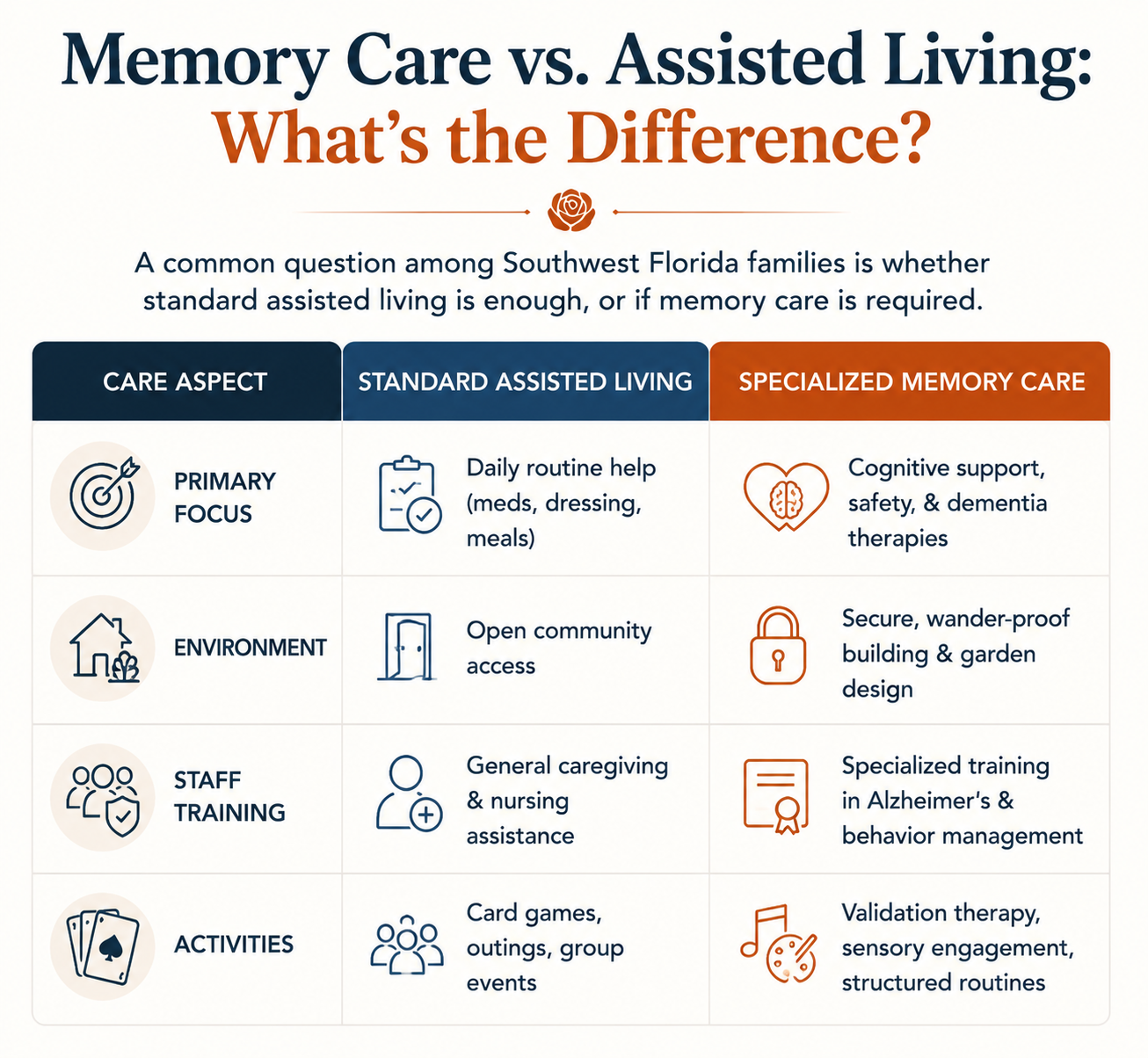
Severe disorientation is a hallmark sign that basic assisted living support may no longer be sufficient, necessitating a dedicated memory care setting. While mild forgetfulness involves losing car keys, dementia involves forgetting what car keys are used for or becoming completely disoriented inside one's own home.
Look for patterns where your loved one forgets the day of the week, the current year, or struggles to recognize familiar family members. When a senior can no longer navigate their own hallway to find the bathroom or consistently gets disoriented in predictable environments, structured memory care provides the reassuring framework they need.
The Rose Garden Difference: Aging in Place with Dignity
At The Rose Garden of Fort Myers, we recognize that no two memory loss journeys are identical. Led by Community Director Rochelle Cain, our compassionate care team understands the emotional weight families carry when making this transition.
We provide a seamless continuum of care under one roof—offering both licensed Assisted Living and specialized Memory Care. This unique structure ensures that as cognitive or medical needs evolve over time, your loved one can smoothly age in place without the anxiety of moving to an unfamiliar building or adjusting to an entirely new staff.
What Sets Our Memory Care Community Apart:
- 90% Private Rooms: Dignity begins with personal space. Our spacious studio apartments feature private bathrooms and individual room thermostats, creating a peaceful, homelike sanctuary.
- Secure Sensory Gardens: Residents enjoy outdoor freedom along secure, beautifully landscaped walking paths designed specifically for fresh air and safe movement.
- Predictable All-Inclusive Pricing: We eliminate financial anxiety through a single, all-inclusive monthly rate that covers room and board, specialized dementia care, three chef-prepared meals, and complete housekeeping. We accept private pay, long-term care insurance, and the Florida Medicaid SMMC-LTC waiver.
Take the First Step Toward Peace of Mind
Recognizing the signs it's time for memory care in Fort Myers is the beginning of a brighter, safer chapter for your entire family. You do not have to walk through this transition alone or figure out complex care choices without support.
Whether you are seeking immediate guidance, exploring care options for the future, or looking to tour our secure gardens and private suites, our team is here with honest answers, real experience, and zero pressure.
Contact The Rose Garden of Fort Myers today at +1 239 456 0351 or schedule a private tour to see how our specialized memory care community can help your family.
Experience The Rose Garden Firsthand
Browse our multimedia Gallery or access our interactive Floor Plans to see our spacious studio designs.
Visit our physical campus at 2117 Earl Rd to experience our welcoming, resort-style atmosphere.
Call our team directly at (239) 456-0351 or email care@rosegardenftmyers.com to schedule an individual clinical consultation.

Schedule a Tour
We invite you to visit our community. Meet Rochelle, the team, and experience the warm, home-like environment that makes The Rose Garden of Fort Myers so special.