

The Healing Power of Nature: Why Sensory Gardens Matter in Fort Myers Memory Care
When families begin researching specialized environments for a parent living with Alzheimer’s disease or progressive dementia, their initial walkthroughs often focus heavily on security features. They look for keypad entries, delayed-egress doors, and alert systems designed to prevent wandering. While physical safety is non-negotiable when managing cognitive decline, a premier memory support program must look past the standard locked-door model. The physical architecture of a community should serve as an active form of therapy rather than just a storage facility.
Fort Myers has a rich, celebrated horticultural identity deeply rooted in its native landscape and sub-tropical climate. Integrating this local outdoor heritage into long-term senior support is one of the most effective ways to promote daily cognitive wellness. Choosing memory care facilities in fort myers that prioritize custom-designed sensory gardens and secure outdoor environments allows families to provide their loved ones with an active, dignified lifestyle that lowers anxiety naturally.
The Neurological Impact of Sensory Overload vs. Natural Landscapes
Seniors living with progressive memory loss process sensory data differently than individuals with intact cognitive function. In many traditional, institutional facilities, indoor spaces are characterized by artificial fluorescent lighting, loud television noise echoing off hard linoleum floors, and long corridors. This constant barrage of unnatural stimuli can cause severe cognitive fatigue, disorientation, and anxiety for an older adult with dementia.
According to long-term memory impairment guidance shared by the National Institute on Aging, over-stimulating indoor environments are a primary trigger for disruptive behavioral symptoms, including pacing, aggression, and sundowning.
Shifting a senior from an intense indoor setting into a natural outdoor environment yields immediate neurological benefits. Exposure to natural sunlight helps regulate circadian rhythms, which stabilizes sleep patterns and minimizes evening confusion. The ambient, organic sounds of rustling leaves, gentle wind, and singing birds provide a soothing sensory background that lowers blood pressure and diffuses agitation without relying on heavy chemical sedation.
How Sub-Tropical Sensory Gardens Function as Active Therapy
A therapeutic sensory garden is far more than a collection of attractive flower beds. It is a highly engineered outdoor landscape purposely designed to stimulate the five senses in a controlled, non-threatening manner.
Clinical research hosted on PubMed demonstrates that structured horticultural therapy and safe access to sensory landscapes significantly enhance emotional connectivity and reduce depression in seniors with advanced cognitive decline.
How Sub-Tropical Sensory Gardens Function as Active Therapy
A therapeutic sensory garden is far more than a collection of attractive flower beds. It is a highly engineered outdoor landscape purposely designed to stimulate the five senses in a controlled, non-threatening manner.
Clinical research hosted on PubMed demonstrates that structured horticultural therapy and safe access to sensory landscapes significantly enhance emotional connectivity and reduce depression in seniors with advanced cognitive decline.
1. Olfactory Triggers and Emotional Memory Retention
The sense of smell has a direct, neurological pathway to the brain's emotional memory centers. For seniors who struggle to remember recent conversations or faces, a familiar scent can instantly unlock rich personal memories. Utilizing native Southwest Florida flora, such as sweet orange jasmine, gardenias, or sub-tropical roses, triggers deep emotional recognition, bringing a profound sense of comfort and clarity to an otherwise confused mind.
2. Visual Continuity and Safe Walking Loops
Dementia often causes a senior to experience spatial disorientation, leading to frantic pacing or exit-seeking behaviors. A properly designed sensory garden uses continuous, circular walking paths that never end in a frustrating dead end or a locked gate. These wide, flat walking loops allow residents to explore independently and safely, transforming a stressful wandering urge into a healthy, calming exercise routine.
3. Tactile and Auditory Engagement
Interacting with nature provides immense comfort. Raised garden beds allow residents to feel the soft texture of native leaves, plant seeds in fresh soil, and experience the physical accomplishment of gardening. The sound of a trickling water fountain provides an auditory focal point that masks unpredictable street noises, grounding the senior in the present moment.
Preserving Senior Autonomy with Secure Outdoor Freedom
One of the greatest emotional challenges of a dementia diagnosis is the progressive loss of personal independence. When a senior is restricted to an entirely indoor unit, they can feel institutionalized or trapped, which naturally increases behavioral resistance during daily care routines.
Providing independent, unrestricted access to a completely secured courtyard preserves a resident's sense of personal autonomy. They can choose to step outside to feel the warm Florida sun, sit quietly on a shaded bench, or socialize with a peer in the garden. This freedom of movement restores a layer of personal control to their daily lives, honoring their dignity while maintaining absolute safety behind the scenes.
The Rose Garden: Cultivating Joy and Calm Through Nature
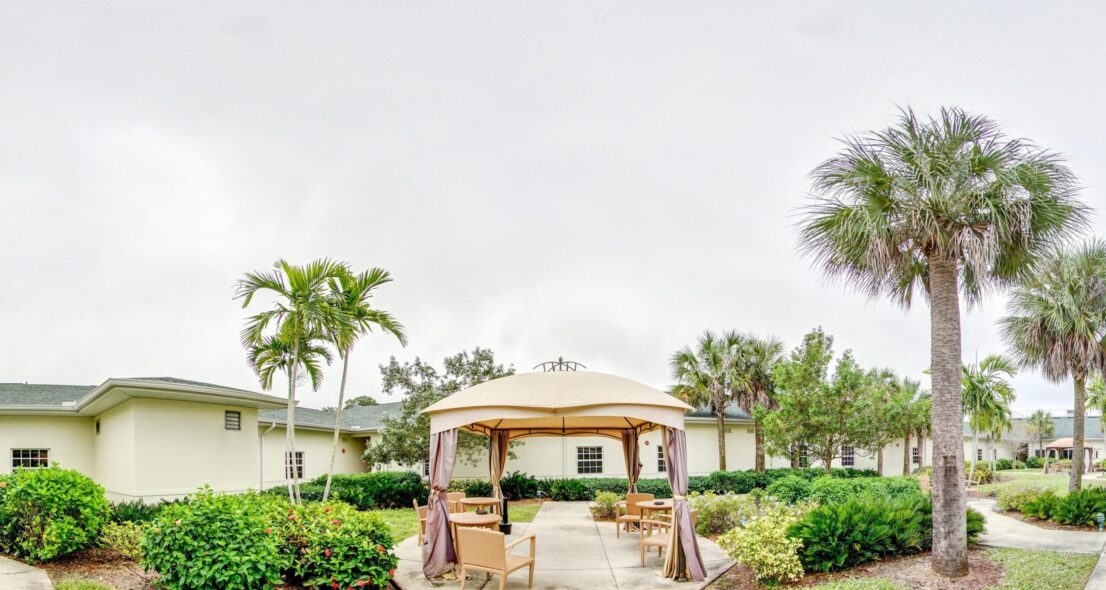
At The Rose Garden of Fort Myers, we recognize that our lush, sub-tropical environment is one of our most powerful tools for cognitive care. We have intentionally built our community around a spacious, completely secured central courtyard featuring custom-designed winding paths, shaded seating pavilions, and rich botanical displays. Our residents can enjoy outdoor lunches, participate in guided gardening projects, or simply take peaceful afternoon walks in a secure, homelike environment.
This natural, therapeutic approach directly reflects the core care philosophy established by our community director, Rochelle Cain. Inspired by her own personal journey of caring for her grandmother, Rochelle has structured our home to eliminate corporate rigidity in favor of relationship-first hospitality.
By combining this peaceful, nature-centered environment with our flat all-inclusive pricing model and full acceptance of the Florida Medicaid SMMC-LTC waiver, we provide Southwest Florida families with absolute financial peace of mind. At The Rose Garden, we use the beauty of Fort Myers to cultivate a lifestyle of safety, purpose, and profound calm for your loved one.
Frequently Asked Questions
How do you prevent residents from leaving the outdoor courtyard area?
Our central sensory courtyard is completely enclosed by secure, structurally sound boundary walls that blend seamlessly into our residential landscaping. Every exit point is monitored by delayed-egress keypad security systems, allowing residents to enjoy outdoor freedom while remaining entirely safe inside our community.
Can memory care residents use the gardens independently at any hour?
Yes, during safe daylight hours, residents have open access to our secure courtyard spaces. Our interior floor plan is designed so that caregivers maintain a direct line of sight into the gardens, allowing our team to monitor our residents' outdoor movements discreetly without interfering with their independence.
What happens if a resident becomes disoriented while in the garden?
Our wide walking paths are built in flat, continuous loops with clear visibility from any point. If a resident appears confused or needs support, our awake, on-site caregivers are always just a few steps away to provide gentle, reassuring redirection and guide them comfortably back to a preferred seating area.
Experience The Rose Garden Firsthand
Browse our multimedia Gallery or access our interactive Floor Plans to see our spacious studio designs.
Visit our physical campus at 2117 Earl Rd to experience our welcoming, resort-style atmosphere.
Call our team directly at (239) 456-0351 or email care@rosegardenftmyers.com to schedule an individual clinical consultation.

Schedule a Tour
We invite you to visit our community. Meet Rochelle, the team, and experience the warm, home-like environment that makes The Rose Garden of Fort Myers so special.